Sports & Outdoors
Garmin inReach Mini 2 Review: A Pocket-Sized Satellite Lifeline for Off-Grid Trips, Tested by SAVEN
The inReach Mini 2 is a satellite communicator the size of a matchbox that lets you text, share your location, and call for rescue from places your phone has never heard of.
Cell coverage ends a lot sooner than most people expect — often within an hour of leaving town. A satellite communicator closes that gap, and the Garmin inReach Mini 2 has become the default choice for hikers, hunters, and backcountry travelers: two-way text messaging, GPS tracking, and an SOS button connected to a global rescue coordination center, all in a device that weighs about three and a half ounces. We looked at whether the smallest inReach still earns its place on a pack strap.
Our Verdict
The inReach Mini 2 does the things that matter off-grid — send and receive texts, report your position, and summon help anywhere on Earth — in a package so small you will never leave it behind for weight. If your trips take you beyond cell coverage, it is the most reassuring few ounces you can carry for around $400.
SAVEN Score: 4.7 / 5
Check Price1. Small Enough to Always Come Along
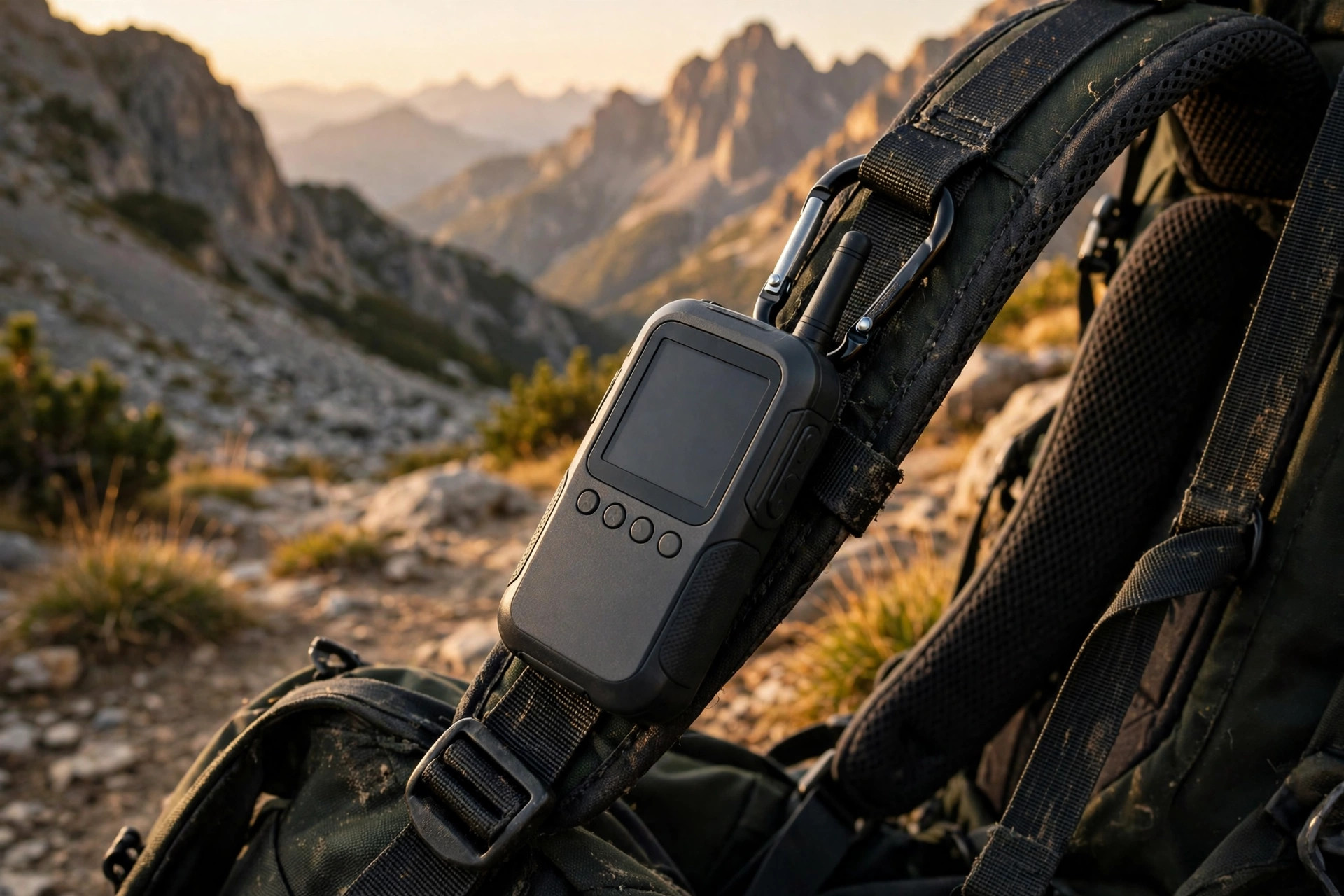
Safety gear only works if you carry it, and the Mini 2 removes every excuse. At roughly two by four inches and about three and a half ounces, it clips to a pack strap or disappears into a hip-belt pocket, and the rugged, water-resistant build shrugs off rain, dust, and drops onto rock. Battery life is the other half of the always-carry equation: Garmin rates it for up to about two weeks in its default tracking mode, and far longer with tracking intervals stretched, so a week-long trip does not require a charging plan. It recharges over USB-C when you do get back to the car.
2. Two-Way Messaging That Actually Works
Older satellite messengers could only send; the Mini 2 holds a real conversation. It sends and receives text messages with phone numbers and email addresses through the Iridium satellite network, which covers the entire planet including oceans and poles. Preset messages can be fired off quickly from the device itself, while longer texts are easier to compose in the companion phone app, which pairs over Bluetooth and lends the phone's keyboard and screen. Messages are not instant like cellular texts — they travel when the device checks in with the satellites — but they are reliable in places where a phone shows no signal at all. A subscription plan is required, with tiers matched to how much you message and track.
3. SOS and Tracking for the People Back Home
The button under the protective cover is the reason this device exists. Pressing SOS connects you to a staffed emergency coordination center that receives your location, communicates with you by text, and dispatches local search and rescue — anywhere in the world, at any hour. Short of an emergency, automatic tracking drops a breadcrumb of your position at set intervals onto a shareable web map, so family can follow a thru-hike or confirm you reached camp each night. The device also receives basic weather forecasts for your location, a genuinely useful feature when a storm can rewrite the next day's plans.
4. Navigation Basics, Deliberately Simple
The Mini 2 is a communicator first, and its navigation features are intentionally modest. A small, sunlight-readable screen shows a compass, your coordinates, and a simple back-to-start route that can guide you to a saved waypoint or back along your recorded track. It pairs with the phone app for proper maps, route planning, and a bigger view of where you are. Think of it as a backup navigator rather than a replacement for a mapping GPS or a well-prepared phone: it will get you back to the trailhead, and that is the job it was designed for. The interface takes a little learning, with most power features living in the app.
What we like
- Global two-way texting and SOS in a 3.5-ounce device
- Up to roughly two weeks of battery in tracking mode
- Location sharing lets family follow along at home
What to consider
- Requires a paid satellite subscription plan
- Small screen makes typing and maps awkward without the app
- Messages send in batches, not instantly
Should You Buy the Garmin inReach Mini 2?
If you regularly hike, hunt, fish, ride, or work beyond cell coverage — and someone at home worries while you do — the inReach Mini 2 is an easy recommendation. Around $400 plus a subscription buys genuine two-way communication and a rescue link from essentially anywhere on the planet, in a device light enough for ultralight backpackers to accept. Travelers who stay on front-country trails with reliable signal do not need it, and those who want full mapping on the device itself should look at larger units. For everyone heading off-grid, this is the communicator to clip on and forget — until the day it matters.
Frequently Asked Questions
Does the inReach Mini 2 require a subscription?
Yes. Satellite messaging, tracking, and SOS all run on paid plans, with monthly and annual options at different message and tracking allowances. Plans can typically be paused during months you are not traveling, so off-season costs stay low.
Can people reply to my messages?
Yes — that is the point of two-way messaging. Anyone you text can reply, and those replies reach the device by satellite. Contacts can also send you a message first through your shared map page, depending on your settings.
How is this different from a phone's satellite feature?
Phone satellite features are designed mainly for emergency SOS in supported regions. The inReach Mini 2 adds everyday two-way texting, continuous location tracking, weather forecasts, and a battery measured in weeks rather than hours — in a tougher device that works even if your phone is dead, lost, or broken.